The Glorious Mess of a Great Idea: Inside Britain's Napkin-to-Product Pipeline
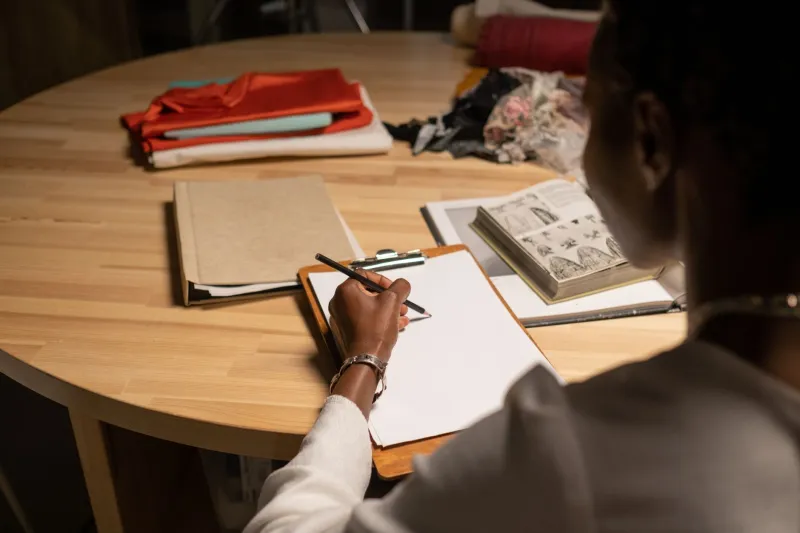
There is a particular kind of magic that happens at roughly 8:47pm on a Tuesday, somewhere between the second and third pint, when someone leans across a sticky pub table and says, "No, but what if—" and then starts drawing on whatever surface is closest to hand.
In Silicon Valley, they call this a "eureka moment." In Britain, we call it a Thursday.
The beermat sketch — or the pub napkin, the till receipt, the slightly damp cardboard coaster from a Wetherspoons in Wolverhampton — is a genuine artefact of British tech culture. Not a romantic myth, not a marketing trope. An actual, recurring phenomenon. And the founders who've lived it will tell you, with a mixture of pride and mild embarrassment, that the scruffier the original idea, the more interesting the eventual product.
Why the Beermat Is Actually the Perfect Brief
Here's the thing about a beermat: it forces brevity. You cannot write a 47-slide pitch deck on a 9cm circle of compressed cardboard. You can write, at most, a problem, a solution, and a rough drawing of a box with an arrow pointing at another box. And weirdly, that's often enough.
Marcus, who co-founded a small SaaS tool for independent landlords in Bristol, still has the original beermat framed above his desk. "It says 'tenants hate forms / landlords hate chasing / fix the middle bit' and then there's a squiggle that was meant to be a dashboard," he told us. "That squiggle became a two-year build and our first paying customers. The squiggle was right."
The constraint of limited space does something useful to an idea: it strips away everything that isn't the core of it. You can't waffle on a beermat. You can't hedge. You're forced to identify the actual thing you're trying to solve, because there's simply no room for the surrounding noise.
This is, in software terms, the most honest kind of MVP: a minimum viable concept, scrawled in biro, tested immediately against the nearest human being who happens to be sitting across from you.
The Role of the Informal in British Innovation
British tech culture has always had a complicated relationship with formality. We are, broadly speaking, suspicious of people who take themselves too seriously — which is both a national virtue and, occasionally, a national liability. But in the early stages of building something new, that scepticism of polish and process turns out to be genuinely useful.
Where other startup ecosystems fetishise the pitch, the deck, the carefully rehearsed two-minute elevator speech, British founders are more likely to have workshopped their idea at a pub quiz, in a WhatsApp group full of sarcastic friends, or at a kitchen table with a mate who immediately told them it was a terrible idea — which, paradoxically, made them more certain it wasn't.
Fiona, who builds accessibility tools for small e-commerce businesses from her home office in Edinburgh, describes her process as "organised chaos with biscuits." Her first product started as a complaint she typed into a Notes app at 11pm, which became a Twitter thread, which attracted enough replies that she realised she'd accidentally done market research. "I didn't set out to validate anything," she says. "I was just annoyed. But being publicly annoyed in the right direction turned out to be quite useful."
When the Sketch Meets Reality: The Bit Nobody Talks About
Of course, the beermat is the fun part. What comes after — the translation of that inspired scrawl into something that actually runs on a computer and doesn't explode when more than three people use it simultaneously — is considerably less cinematic.
This is where most ideas quietly die, not because they were bad ideas, but because the gap between concept and working software is a long, difficult road paved with scope creep, dependency hell, and the dawning realisation that you've been spelling a variable name wrong for six weeks.
The founders who navigate this successfully tend to share a few habits. First, they stay close to the original sketch — not slavishly, but as a north star. When the build starts sprawling (and it always starts sprawling), going back to the beermat and asking "does this feature exist on the original squiggle?" is a surprisingly effective way to cut scope.
Second, they build for one person before they build for everyone. Not a persona, not a demographic, not a "user type" — an actual specific human being with a specific annoying problem. Marcus's landlord tool was built, initially, entirely for his mate Dave, who was managing six properties and losing his mind over deposit disputes. "Dave was my entire beta programme," he says. "Dave was extremely demanding and also free."
Third — and this is the one that gets skipped most often — they ship something embarrassingly early. The British instinct is to apologise before anyone has even seen the product, to over-qualify, to say "it's not quite ready yet" for approximately eighteen months. Resisting this instinct, and getting something — anything — in front of real users before it feels finished, is almost universally reported as the decision that saved the project.
The Beermat as Philosophy
There's a reason this site is called Beermat Software, and it's not just because the domain was available (though that helped). It's because the beermat represents something genuinely worth celebrating about the way small, independent British teams build things.
Not the glamour of the launch event. Not the Series A announcement. Not the LinkedIn post with the rocket emoji. The actual, human, slightly tipsy moment when someone thinks they might have spotted a problem worth solving, and writes it down on whatever's nearest, and shows it to someone else, and that person goes, "...huh. Yeah, actually."
That moment is where everything starts. And if you're sitting on a rough idea right now — scrawled on a receipt, saved as a voice note, or just rattling around your head — here is your reminder that the mess is not a problem to be solved before you begin. The mess is the beginning.
Grab a beermat. Start drawing.