Dope Wars, Spreadsheets, and the Game That Taught a Generation to Code
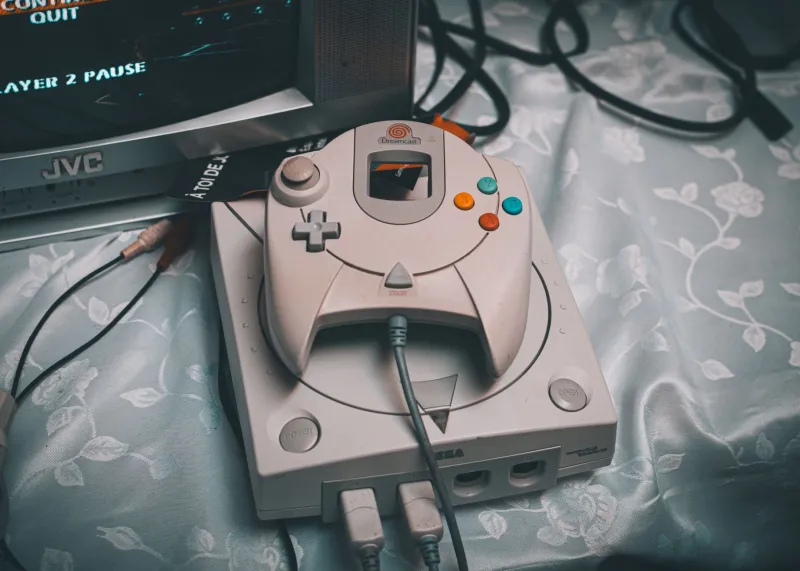
Somewhere in the mid-1990s, on a school computer that was almost certainly not supposed to be used for this, a British teenager discovered Dope Wars. The screen was monochrome, the interface was barely an interface, and the premise was completely absurd. And yet, something clicked.
Not morally, obviously. But intellectually? Absolutely.
Because Dope Wars — originally derived from John E. Dell's 1984 text-based game Drug Wars, itself inspired by a BASIC program floating around on floppy disks — was, beneath its scandalous skin, a genuinely elegant piece of software design. It was a supply-and-demand simulator dressed up in a trench coat. And it taught more about market volatility, inventory management, and risk-reward trade-offs than most secondary school economics lessons ever managed.
What Actually Was Dope Wars?
For those who somehow missed it: Dope Wars was a turn-based strategy game in which you played a street-level trader, moving between locations, buying low, selling high, and trying not to get arrested, shot, or bankrupted by a random event that wiped out your entire inventory.
The genius of it — and it was genius, however unlikely that sounds — was the randomness. Prices fluctuated wildly. Events were unpredictable. You could be doing brilliantly one turn and completely ruined the next. Sound familiar? It should. It's basically the stock market. Or, frankly, running a startup.
The version most people remember was the shareware Windows port by Simon Moon, released in the late 1990s, which spread across school networks and office computers like a particularly cheerful virus. IT departments hated it. Teenagers loved it. And somewhere in between, a few future software developers quietly started wondering: how does it actually work?
The Unlikely Coding Curriculum
Here's the thing about Dope Wars that nobody talks about in polite company: it was one of the most effective accidental coding tutorials ever created.
Because once you'd played it enough times, you started asking questions. How does the price randomisation work? Can I mod it? Is there source code somewhere? And in the glorious chaos of the early internet — where forums were text-only, downloads were slow, and documentation was basically optional — finding those answers required genuine curiosity and a willingness to dig.
The open-source versions of Dope Wars (yes, they existed, and they were brilliant) became playgrounds for a generation of developers who learned by tinkering. You could change the locations, the items, the event probabilities, the loan shark's interest rate. You could, if you were sufficiently motivated and had a free Saturday afternoon, rebuild the entire thing from scratch.
Many did. Many of those people are now writing production code for a living.
The Beermat Business Model, Circa 1998
What's genuinely fascinating about Dope Wars, from a software and startup perspective, is how well it maps onto the kind of lean, scrappy thinking that Beermat Software celebrates.
The original concept was scribbled-on-a-napkin simple: buy things cheap, sell things dear, don't run out of cash. That's it. That's the entire game loop. And yet from that single, stupidly simple premise, the developers built something with genuine depth, replayability, and a fanbase that persisted for decades.
There's a lesson there. The best ideas really do fit on a beermat. Dope Wars fits on a beermat and has room left over for a phone number.
The game also pioneered something that modern SaaS companies spend millions trying to achieve: virality through genuine word of mouth. Nobody bought Dope Wars. Nobody marketed Dope Wars. It spread because someone showed it to someone else on a lunch break, and that person showed it to three more people, and suddenly it was on every networked computer in the building.
Organic growth. Zero budget. Enormous reach. The indie software dream, achieved in 1998 by a bloke who probably just wanted to make something fun.
Risk, Randomness, and Why Founders Should Play More Games
One of the persistent myths in British startup culture is that success is primarily about planning. Get the deck right. Nail the projections. Stress-test the assumptions. And yes, fine, those things matter. But Dope Wars understood something deeper: the random event is always coming.
You could play a perfect game — buy at the right time, sell at the right time, avoid the loan shark, diversify your inventory — and still get wiped out by a single bad turn. The market crashes. A competitor appears. Something completely outside your control rewrites the rules.
Every founder who has ever watched a carefully laid plan dissolve in the face of an unexpected API change, a funding winter, or a global pandemic knows exactly what that feels like. Dope Wars was just honest about it.
The appropriate response, the game taught you, was not despair. It was adaptation. Reload, reassess, and try a different route.
The Legacy Nobody Expected
Dope Wars is still out there. There are modern remakes, browser-based versions, mobile ports, and fan projects that have kept the core loop alive for thirty-odd years. It has outlasted most of the legitimate software released in the same era. It has outlasted companies with actual venture funding and proper marketing budgets.
And it did it by being genuinely, unashamedly fun — and by being small enough that anyone with a bit of curiosity could look under the hood and understand how it worked.
That's not a bad epitaph for any piece of software. That's not a bad ambition for any developer sitting in a British office right now, wondering whether the thing they're quietly building in their spare time could ever amount to anything.
It could. Start simple. Keep it tight. Accept the random events.
And maybe don't trust the loan shark.
Beermat Software celebrates the scrappy, the clever, and the quietly brilliant. If you built something weird and wonderful in the 1990s that we should know about, you know where to find us.