The Buffering Village: Designing for the Places the Fibre Forgot
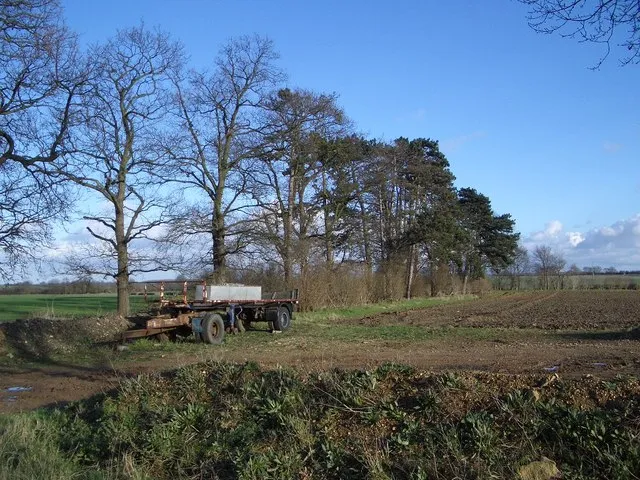
Photo: Nigel Stickells, CC BY-SA 2.0, via Wikimedia Commons
There is a particular kind of optimism in the phrase "just use the app". It is the optimism of someone who has never stood in a Yorkshire village hall car park at 7pm, holding a phone aloft like a latter-day Statue of Liberty, waiting for a single bar to appear so a spreadsheet can sync.
Britain's connectivity map is a lovely piece of design work. It is also, in places, fiction. The map says outdoor coverage. The reality says outdoor coverage on a hillside, in dry weather, facing the right way, with your back to the wind and no leaves on the trees. A fibre-fed Shoreditch desk is not a test environment. It is a laboratory for a country that does not exist.
Coverage is a claim; latency is a fact
Nobody in a coastal town in Cornwall or a fellside hamlet in Cumbria is asking you to feel sorry for them. They are asking your software to work. These are the same people running parish councils, village shops, farming admin, care visits, plumbers' diaries and the local newsletter. They are not a niche. They are a customer base with an unusually honest set of constraints.
The constraints, roughly: bandwidth that varies by the minute, latency that spikes without warning, connections that drop mid-submission, power that flickers, and devices that are three generations behind whatever the design agency mocked up on a 6K monitor. Design for that and you have designed for resilience. Design for Canary Wharf and you have designed for a demo.
Offline-first is a posture, not a feature bullet
Too many teams treat offline support as a checkbox added in sprint fifteen, after the data model has set like concrete. It doesn't work that way. Offline-first is a decision about where the truth lives, and it has to be made early, ideally on the back of an envelope.
Practically, that means:
- Write locally first, sync second. The user's action should succeed on the device before any network call is attempted. Not "succeed eventually". Succeed now.
- Queue submissions durably. If the signal dies halfway through a form, the form should still be there in the morning, along with a plain-English note about what hasn't gone through yet.
- Make last-updated honest. "Last synced 14:32, three changes waiting" beats a spinner that has been spinning since Tuesday.
- Resolve conflicts with a human in the loop. Automatic last-write-wins is fine for a shopping list and a disaster for anything with money, rota or livestock attached.
- Never fake it. A greyed-out button that says "no connection, we'll retry" is honest. A button that appears to work and silently drops the data is a support ticket with a five-day fuse.
Designing for the upload that takes an hour
Low-bandwidth UX is mostly an exercise in restraint, which is not the British software industry's strongest muscle.
Compress images hard before they leave the device, and let people choose. Offer an SMS or phone fallback for the one thing that really matters, because a surprising number of rural users will happily ring the office and will not happily install an app. Make the printable version a first-class artefact, not a consolation prize — a PDF that survives being printed in the village hall is worth more than a beautiful empty state. Assume a 2016 Android with 4GB of storage and a cracked screen, because that is what a lot of people are actually holding. And whatever you do, don't make the app the only door into the building.
There's a design test hiding in all this: throttle the connection to something grim and watch a real person try to complete the task. Everything you thought was elegant will reveal itself as either necessary or ornamental. Most of it is ornamental.
The village hall is the best QA lab in Britain
Book the hall. Put the kettle on — you'll need it. Bring the worst phone in the office, the one in the drawer that everybody mocks. Throttle to 2G, then to "almost nothing", then to "gone". Walk around the building and see where the connection dies, because there will be a specific chair where it dies, and every regular user knows exactly which chair that is.
Then give the thing to the parish clerk, the volunteer who does the bookings, the person who keeps the books on a Sunday evening. They will find the failure modes your automated tests never imagined, in about four minutes, and they will be unfailingly polite about it. That is a better return on a day's effort than most agencies deliver in a quarter.
Digital inclusion is procurement, not charity
For anyone selling into local authorities, this is the part that gets skipped. Digital inclusion is not a warm feeling; it's a requirement. Public services increasingly have a legal and moral obligation to serve people who are not online, not confident, or not able to use a smartphone. That means assisted digital routes, telephone channels, paper alternatives and accessibility that goes beyond a WCAG badge slapped on a PDF.
So put it in the tender response as a design principle rather than an afterthought. Say what happens when the connection drops. Say how a submission is confirmed without a network. Say who can complete the task by phone. Councils buy confidence, and a supplier who has clearly stood in a cold car park thinking about this is a different proposition from one who has clearly not.
The beermat
Six lines, then go and test it somewhere with a postcode that starts with CA or YO.
- Write locally, sync second.
- Queue everything that leaves the device, durably.
- Tell the truth about what hasn't synced.
- Always keep a phone and paper route into the service.
- Test on the worst device, on the worst connection, in the worst chair.
- Ship the version that works in the rain.
A slow connection in a Yorkshire village is a more honest reviewer than any London office full of fibre and optimism. Take the train. Bring a coat.