Ditch the Agenda: The Case for Making Decisions Somewhere That Isn't a Meeting Room
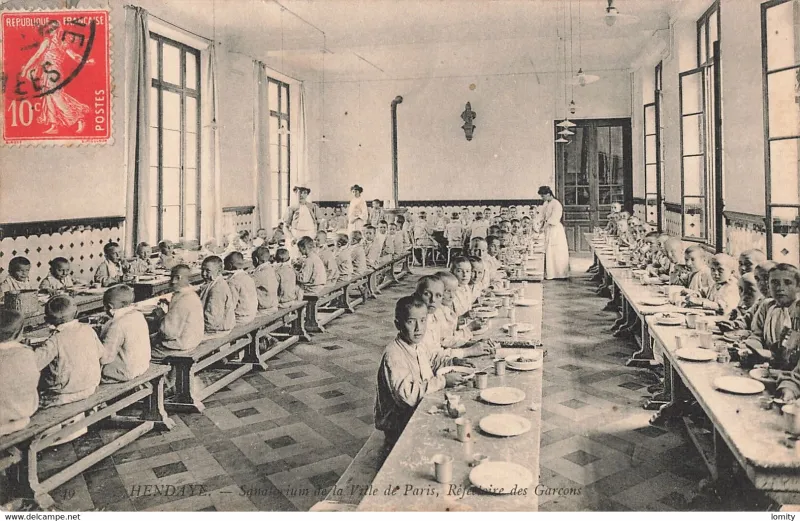
Photo: colleagues having casual conversation over coffee in relaxed office setting, via www.delcampe.net
The meeting room is a lie. Not in a conspiratorial sense — the chairs are real, the whiteboard is real, the slightly stale biscuits are devastatingly real. But the idea that the meeting room is where decisions get made? That part is largely fiction.
Anyone who has spent more than six months working in a British tech company knows what actually happens in meeting rooms. Positions are defended. Faces are saved. The person with the loudest voice or the most senior title steers the conversation toward a conclusion they'd already reached before anyone sat down. The rest of the attendees nod at varying speeds and wonder if they could have handled this over email.
Meanwhile, the actual decision — the one everyone will actually act on — gets made in the corridor afterwards, or in the kitchen while the kettle boils, or, yes, in the pub.
Why the Pub Works (and It's Not the Beer)
Let's be precise here, because this is important: the pub is not a productivity tool because of the alcohol. It works because of everything else. The ambient noise means you can't perform for an audience. There's no screen to hide behind. Nobody's taking minutes. The social contract of the environment is fundamentally different — you're having a conversation, not conducting a meeting, and that distinction matters enormously.
In a meeting room, people say what they think they're supposed to say. In a pub booth, people say what they actually think. The stakes feel lower even when they aren't. The absence of formality makes honesty cheaper.
This isn't a uniquely British phenomenon, but it does map neatly onto a particular strand of British workplace culture: the deep suspicion of anything that looks like it's trying too hard. The meeting room, with its agenda and its allocated time slots and its action items, is trying very hard indeed. The pub is demonstrably not. And somehow that makes it the safer space to say "I don't think this plan is going to work."
The Actual Problem with Formal Decision-Making
Here's what meeting bloat does to a tech team. It creates a performance layer between people and their actual opinions. When every conversation is official, every opinion becomes a position. Positions require defending. Defending positions requires not being seen to change your mind, because changing your mind in a formal setting feels like losing.
The result is that teams make worse decisions, more slowly, with more confidence, than they would if they'd just talked about it honestly over a coffee.
Somewhere along the way, British tech culture absorbed the idea that rigour means formality. It doesn't. Rigour means thinking clearly and honestly about hard problems. You can do that in a meeting room if you must, but you'll do it faster and better somewhere that doesn't feel like a performance review.
The beermat principle applies here in a fairly literal sense. The best ideas — the ones worth pursuing — tend to emerge in informal settings, scribbled on whatever's to hand. The formal setting comes later, to document and execute. If you're trying to generate the idea inside the formal setting, you've got the process the wrong way round.
Practical Alternatives for Teams Who Can't Always Go to the Pub
This is not a manifesto for day drinking. Most tech teams are distributed, many are remote, and the suggestion of "just go to the pub" is not universally practical or inclusive. But the underlying principle — remove the formality, lower the stakes, create space for honest thinking — absolutely is.
The walking meeting. Underused to a frankly criminal degree. Two people walking side by side cannot make eye contact in the way that two people sitting across a table can. That small shift in physical dynamic produces a measurable change in conversational tone. Problems that felt stuck get unstuck. Walking meetings are particularly good for difficult conversations and genuinely thorny decisions where you need the other person to be honest with you.
The async pre-think. Before any significant decision meeting, send the question out in writing and give people 24 hours to respond in their own time. You'll get more considered, more honest responses than you'll ever get in a room where one person starts talking and everyone else reacts in real time. The meeting then becomes a conversation between people who've actually thought about the problem, rather than a live improvisation exercise.
The deliberately small meeting. If you need more than four people in the room to make a decision, you probably don't have a decision to make — you have a communication exercise to run. Keep decision-making groups small, and brief everyone else afterwards.
The unofficial debrief. Build in ten minutes after any significant meeting where the actual decision-makers can talk without the formality. This is where the real alignment happens. The meeting establishes the official position; the debrief establishes whether anyone actually believes it.
The Two-Question Test
Before scheduling any decision-making meeting, ask yourself two things. First: could this be resolved with a well-written message and a day to think? If yes, send the message. Second: are the people who need to make this decision able to speak honestly in the format you're proposing?
If the answer to the second question is uncertain, change the format. Move to a smaller group. Go for a walk. Find a quieter corner of the office, or a coffee shop, or yes, a pub. The decision doesn't care where it gets made. The team does.
British tech culture has accidentally stumbled onto something that management consultants charge a fortune to teach: psychological safety isn't a workshop outcome, it's an environmental condition. Sometimes the fastest way to create it is to step outside the building.
The agenda can wait. The kettle is on.